The post Introduction to coffee presentation appeared first on Maillardreaction.org.
]]>Me and my team did it to inspire and, more importantly, to create the tactics and details around how you, your organization, your startup can know more about start working on coffee business.
However this deck continues my tradition of training step-by-step guides that give you the exact information I’ve used to run my introduction to coffee class. That includes references like :
Coffee Origins . Biology of coffee plant . Coffee’s Growing Region . Coffee’s Journey . Current Coffee Industry . Coffee origin . How coffee is traded . Species . Varieties . cultivar . Harvesting . Processing . Processing Flavor Description . Quality Control . Roast Process . effect on taste . Roasting graph . Different roast style . storage . Coffee freshness . Humans Senses . Taste . SCA Flavor Wheel . Effect of geographical position on coffee flavor . Cupping . How to do coffee cupping . Brew methods . Brewing parameters . Filter material . Coffee extraction definition . Water Quality . What is Specialty Coffee / Organizations in Specialty Coffee / waves /.

The post Introduction to coffee presentation appeared first on Maillardreaction.org.
]]>The post Mocha Or Mokha appeared first on Maillardreaction.org.
]]>
Coffee from Al-Mokha began to be referred to simply as Mocha coffee, a name originally having little to do with the chocolatey coffee drink you can buy today. (Mocha is also used to refer to a coffee varietyoriginating from Yemen, one that the SCA describes as “genetically very close to Bourbon.”)
Yemen coffee has a distinct flavor and aroma. It’s complex earthiness often holds tones of dried fruit, partly due to being dried with the fruit husk. This Arabian Yemen coffee also carries notes of chocolate, cinnamon, cardamom or tobacco. The strongest of these notes is chocolate, which might account for the modern use of the word “Mocha” in association with Yemen coffee.
How It’ Grown ?
Yemen coffee farms are typically small and on the wilder side, with farmers hand-picking the coffee cherries from ancient varieties of Arabica plants growing on gorgeous, terraced mountainsides. The microclimate has produced drought-resistant coffee plantsthat create very unique, complex-tasting coffee beans with that iconic chocolate flavor The coffee is typically harvested between November and December and is sun-dried, often right on the rooftops of the farmers’ houses! It’s an easy process in the bright and hot Yemeni climate. The leftover cherry husks are also used to create qishr(the local brand of cascara)

Sanani Coffee
First, we have the Sanani variety, which comes from various coffee plants grown in the regions west of the capital city of Sana’a. This region tends to include some crops grown at lower altitudes, and can, therefore, be of lower quality. Beans from this region have a balanced and fruity flavor profile, a medium body, and typically exhibit less acidity than other Yemeni coffees.
Hirazi Coffee
Hirazi coffee also comes from the western regions of the nation, located a couple mountain ranges west of the capital of Sana’a. This coffee tends to be light and fruity, with a winey acidity.
Ismaili Coffee
One of the few categorized ancient coffee tree varieties of Yemen, Ismaili is the name of a coffee plant varietal. Typically grown in central Yemen, it yields a unique, high-quality, pea-like coffee bean that tends to be bright and berryish, though this brightness can be muted. This tree/region name overlap can lead to some confusion regarding whether a particular coffee with this name comes from the region itself, or from a tree of that variety
The post Mocha Or Mokha appeared first on Maillardreaction.org.
]]>The post What happen in the coffee farm? appeared first on Maillardreaction.org.
]]>
The beans we roast, grind, and brew to make coffee are the seeds of a fruit. The coffee plant produces coffee cherries, and the beans are the seeds inside. Coffee trees can naturally grow to over 30 ft/9 m. But producers prune and stump plants short to conserve the plants’ energy and to help harvesting. Smaller trees have better yield and quality in a limited space. Each tree is covered with green, waxy leaves that grow in pairs and coffee cherries grow along its branches. Depending on the variety, it takes three to four years for a coffee plant to produce fruit. The National Coffee Association USA states that the average coffee tree produces 10 lbs. of coffee cherry per year, which results in around 2 lbs of green beans. But there are different varieties of coffee and their beans have many different characteristics. Size, flavor, and disease resistance vary, among other factors. beans, which are the unroasted seeds from inside the ripe coffee cherry. Beneath the cherry skin is a thin layer called the mesocarp, more commonly known as the pulp. Mucilage is the inner layer of the pulp. There’s also a layer of pectin underneath the mucilage. These layers are full of sugars, which are important during the fermentation process. Then we reach the coffee seeds, which are technically called the endosperm but that we know better as beans. There are usually two beans in a coffee cherry, each of which is covered by a thin epidermis known as the silver skin and a papery hull that we call parchment (technically the endocarp). The parchment is usually removed in hulling, which is the first step in the dry milling process. Machines or millstones are used to remove any remaining fruit and the dried parchment from the beans. But sometimes green beans are sold with this layer intact as parchment coffee. The silver skin is a group of sclerenchyma cells that are strongly attached to the beans. These cells form to support and protect the seed. They come off during roasting, when they are known as chaff.


A coffee cherry’s skin is called the exocarp. It is green until it ripens to a bright red, yellow, orange, or even pink, depending on variety. Green coffee cherries shouldn’t be confused with green coffee.
Sometimes there is just one seed inside a coffee cherry and it is rounder and larger that usual. This happens in about 5% of coffee cherries and the beans are known as peaberries. Peaberries can be an anatomical variation of the plant or they can form when there is insufficient pollination and one ovule isn’t fertilized. Sometimes the seed simply fails to grow, whether due to genetic causes or environmental conditions. Peaberries usually occur in the parts of the coffee plant that are exposed to severe weather conditions. There is some debate over whether peaberries have a sweeter and more desirable flavor and they are sometimes sold at a premium. Regardless of whether you think they taste different, their rounded shape allows for better rolling in the roasting drum. So it’s best to keep them apart from other beans to avoid an inconsistent roast. Coffee cherry skin and fruit is usually discarded, but sometimes they are dried to make cascara for tea and other products. It is difficult to remove skin and mucilage from coffee beans and different processing methods have developed to do so. Each method has an effect on the flavor and profile of the final coffee. For example, washed coffee has all of the fruit flesh removed before drying. But in natural coffee the fruit flesh is removed after drying. In honey and pulped natural processing, the skin and sometimes part of the mucilage is removed before drying but the remaining mucilage and other layers are removed after. Leaving the mucilage on results in sweeter coffee with more body. It’s easier to understand why if we compare both dry and wet post-harvest processes. When coffee cherries are taken from the branch, they start to germinate. This uses the sugar in the seed. Germination stops when drying begins. Natural processed coffees go to the drying terrace earlier than pulped naturals or washed coffees. Because of this, more sugars remain in the naturals and you end up with a sweeter bean. Washed coffees have clean, more consistent flavors that can show off a lot of acidity. Natural coffees have a lot more fruitiness, sweetness, and body. The sugars of the mucilage also ferment during both dry and wet processing, and this has an impact on the final flavor. Without careful monitoring and consistent drying, the unpredictable process of fermentation can undesirable qualities. Understanding the basics of the coffee cherry can help you better understand production, processing, and roasting. Next time you are choosing between a natural processed and washed coffee, you can have more confidence in knowing what that means and its impact on your cup.

The post What happen in the coffee farm? appeared first on Maillardreaction.org.
]]>The post Different perspective of coffee history appeared first on Maillardreaction.org.
]]>If you’ve ever wondered about these questions, get ready to find out the answers. I’m going to take you through a very brief history of coffee consumption, from the 1400s through to today.
Traditional Coffee Consumption is about Guest Rites & Politics effect It’s hard to trace the consumption of coffee back to its first discovery. It seems to have emerged somewhere in Africa and the Middle East, perhaps as a form of medicine or stimulant. However, the only thing we can say for sure is that, in the 1400s, it was being brewed in Sufi monasteries. Traditional coffee consumption in the Middle East used coffee to welcome guests and as a backdrop to negotiations. It was often a ritualized experience that took place in the home. During the Ottoman Empire, coffee also started to be sold at marketplaces before becoming favored at court. From there, the coffee house emerged, And as coffee spread to Europe – and then, through European imperialism, further around the world – its association with politics, male social circles, and liberal thought solidified. From Sweden to Colombia, the ruling classes developed anxieties that the drink was a front for fomenting political and social unrest. Religious leaders, too, saw the café as a place of dangerous thought: in 1702, ministers in Salem mocked the “learned witlings of the coffeehouses” for doubting that witchcraft might exist. These attitudes continue up to the 1800s, when coffee culture started to resemble modern-day coffee consumption. The first wave coffee is marked by its increasing availability. While coffee used to be a drink of the elite, whether they were royalty or simply intellectuals, the first wave brought it into the kitchen. During the 1800s, Folger’s and Maxwell House opened up shop. Both instant coffee and the percolator, a coffee-maker that remained in wide use until the 1970s, were also invented this century. Then, in the early 1900s, the espresso machine appears – and shortly after that, Nescafé and freeze-dried instant coffee do as well.
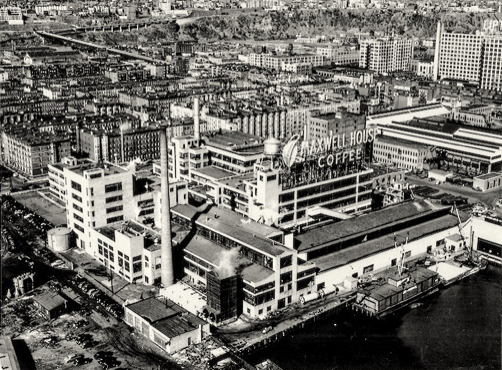
While instant had already existed, freeze-drying technology allowed it to stay good for longer, making it both easier and cheaper to transport over long distances. What’s more, US American soldiers stationed abroad, in countries like Korea, helped instant coffee consumption to become more widespread. The second wave is marked by an increasing concern over coffee quality and the specialty experience. Starbucks was founded in 1971, in 1974 Erna Knutsen used the phrase “specialty coffee” in Tea & Coffee Trade Journal, and in 1982 the Specialty Coffee Association of America was founded. This movement was also shaped by the Colombian coffee icon of Juan Valdez, who first appeared in the late 1950s. A fictional character created by the country’s national coffee association, FNC/Café de Colombia, for their marketing campaigns, he became famous across the US. His role was to remind people that some coffees really do taste better than others.
With the third wave comes a focus on the story behind the cup. The coffee variety, country of production, terroir, processing method, roast profile, brewing method… Consumers started to realize the impact that all this can have on the taste of the final coffee. On some coffee farms, experimental processing methods also emerged in an attempt to cater to this new, more discerning type of consumer. That isn’t to say that all third wave coffee was based on new technology: the Chemex, for example, was invented in 1941. However, there was a new interest in complexity, more acidity, and how to manipulate brewing to taste the unique flavours of the coffee beans themselves.
The term “fourth wave” is a divisive one: some believe it doesn’t exist beyond marketing. Others argue that it could be used to indicate a drive towards greater use of technology and science in coffee brewing. For now, however, most people consider us to still be in the third wave of coffee.
The post Different perspective of coffee history appeared first on Maillardreaction.org.
]]>