The post coffee Fermentation appeared first on Maillardreaction.org.
]]>general
Wet processing of coffee often includes a fermentation step, cocoa always does and tea processing has a step that is sometimes called ‘fermentation’. In food production there are many fermentations that confer nutritional, taste, stability or all of these benefits on raw materials. Sauerkraut, yoghurt, salami, tempe, uji, soya sauce, beer, and cheese are a few examples of scores of food fermentations known around the world.
Coffee fermentation, as we will see, is conducted for rather different reasons. The term ‘fermentation’ represents microbial growth as it occurs on any suitable substrate. In fact, in the early days of microbiology, the organisms that grew to spoil food were originally called ‘ferments’, rather than ‘microorganisms’, hence their growth was termed ‘fermentation’.
A second, narrower sense of ‘fermentation’ is often used in microbiology, which we will not use in this discussion: microbial activity in the absence, or near absence, of oxygen. However, it is worth remembering that vigorous microbial metabolism often depletes oxygen (and so augments CO2) thus oxygen limitation is usually an important aspect of food fermentations. It is an important factor in the selection of a fermentation community from the initial community of microorganisms. Bacteriologists also speak of fermentative organisms – microbes that do not require oxygen for respiration and oxidative species that do require oxygen for growth. In referring to organisms, we will use these bacteriological terms.
The so-called fermentation of tea raises an important aspect of some food fermentations. The changes wrought in tea by ‘cutting, tearing, curling’ (CTC), followed by aeration are produced by plant enzymes, not microbial activity. There is often a potential ambiguity in the roles of microbial and plant metabolism in processing systems since often both kinds of organisms are simultaneously active at some time during the process. Cocoa fermentation is required for flavour development although it also aids separation of seed from fruit tissue. Coffee fermentation, though it may have an impact on flavour development, is not required for flavour development and is conducted essentially to aid a similar separation of tissues.
Microorganisms occur naturally on and in the coffee fruit in increasingly large numbers as the fruit matures. The seeds themselves become active with maturity and a proportion of seeds will have undergone the early changes associated with germination by the stage of full ripeness. The fruit itself has no capacity to store, unlike apples and oranges, for example. Resident micro-organisms become active soon after harvest and signs of (unintended) fermentation can be measured soon after harvest. The object of our discussion here is principally the scheduled fermentation used to degrade the mucilaginous mesocarp tissue of the fruit.
Structure of the Coffee Fruit
The product of coffee are the seeds which are produced in small cherry-like fruits, normally in pairs. Of particular significance in understanding coffee processing are the three tissues of the fruit: the epidermis (or skin); the mesocarp (or mucilage) and the inner integument (or parch).
The epidermis is typical of plants, comprising a layer of small cells, including stomata, their cell walls impregnated with suberin, a water impermeable wax. Beneath this is the mesocarp which consists of many layers of parenchymatous cells – undifferentiated thin walled cells and which, in the ripe fruit, are large with large vacuoles. The inner integument, which is tightly adpressed to the seeds, is a very tough and relatively inelastic layer no more than two or three cells thick but comprising cells with considerable secondary thickening, i.e. it is essentially woody. Xylem tissue, presumably once connected to the funiculus (the tissue that connects the seed to its nutritional supply during development), can be easily seen in the integument by direct observation, running parallel to the surface of the tissue.

Before ripeness, the skin, mesocarp and parch form a tough and tightly adpressed covering to the seeds which are relatively soft at this stage. Attempts to remove the seeds at this point will invariably break the seeds. When ripeness is reached, the mesocarp becomes soft (hence the term mucilage), and the seeds relatively hard. If mechanical shear is applied now, the mesocarp splits to produce one fraction of skins with some mucilage and a second fraction of seeds tightly covered in their integument (parch), which is covered in a fairly thick layer of mucilage. this second fraction that is fermented to enable removal of the mucilage from the seeds.
It can be that the mesocarp of robusta fruit is thinner than that of arabica. It is, however, tougher and more difficult to remove from the parch. The mesocarp adhering to the parch is chemically quite different to that adhering to the skin. It lacks the characteristic anti-nutritional compounds such as tannins, free phenolics, caffeine and other alkaloids that make skins refractile even in composting. A tonne of ripe arabica cherry yields about 120kg of mucilage adhering to the beans. About half of the 17kg of the dry mass of this mucilage is sugars or some 8.5kg of sugars. This is the source of fermentable carbohydrate for the coffee fermentation. There are also minerals, particularly Ca, K and P, and amino acids present.
Pectic substances amount to about 35% of the dry mass of the bean-associated mucilage. They comprise essentially polygalacturonic acid chains (covalent bonds typical of all polysaccharides) that are cross-linked, via Ca+2 ions through the carboxylic groups of the uronic acids. As will be discussed below, the esther part of the carboxylic group and the glycosidic bonds of the chains are susceptible to attack from enzymes.
Wet Processing and Dry Processing:
Coffee must be dried in order to stabilise it and preserve quality. Wet processing refers to various methods where the seeds are mechanically separated from the skin of the fresh fruit (pulping) before drying and may or may not include a fermentation step. Dry processing refers to methods where the fruit is either dried directly or is disrupted, but the seeds not separated from the fruit tissues, then immediately dried. The decision as to which method to employ is based on economic considerations. Washed coffee commands a higher price, but is more expensive to produce.
A large proportion of arabica coffee is processed by the ‘wet method’ and a high proportion of this has a fermentation step in it. The market for washed robusta is limited, and the premium offered above dry processed robusta is small. Therefore, only a small proportion of robusta coffee is processed by the wet method, the bulk of this in India.
Capital costs for wet processing are high. Power, provided by mains electricity, petroleum powered generator or direct drive arrangements is required for even moderate sized operations. A good water source and fairly well-designed plumbing is also required. A facility to house equipment and various sealed channels and tanks are also necessary. The equipment comprises a pulper as a minimum, and typically includes a hopper, siphon tank, post pulping screen, washer or washing channels and skin-drying screens.

Operational costs are also higher for wet processing. Harvesting is particularly expensive because it requires the very labour-intensive selective harvesting system – only ripe cherries can be pulped. This is beginning to change due to new equipment that can accept (but not pulp) immature cherries. Further costs accrue because cherries affected by coffee berry disease, immature or over ripe cherries must be separated and sold as low grades, returning a low price.
There are generic differences in taste attributes between washed and natural coffees and both are required for different market segments: wet processed coffee yields a ‘softer’ cup with less body and higher acidity while the ‘arabica naturals’ excel in their body and bitterness while lacking acidity. Within the classification of washed coffees there are two commercial market segments: ‘Colombian milds’ and ‘other milds’, a distinction that is delimited by origin. Either may or may not be fermented and the ‘other milds’ characteristically have more body and less acidity than ‘Colombian milds’.
Coffee Fermentation:
Coffee is fermented, as mentioned above, to ease the removal of a layer of mucilage from the seed/inner integument to which it adheres. This is not to say there are no taste implications to this step. In contrast to coffee, the fermentation of cocoa is required to develop the flavour of the product though much of this is apparently accomplished by cocoa enzymes, rather than microbial activity. In coffee too, it has long been held that fermentation has a beneficial effect on flavour but lately, this has been disputed and many quality experts now accept the contention that mechanically washed coffee (with no fermentation) can be of comparable quality to the fermented product. What is beyond dispute is that badly conducted fermentation can result in disastrous losses in quality.
In general coffee fermentation is conducted as ‘dry fermentation’ where the mass of mucilage and parchments are not covered with water. The temperature of either of these processes is scarcely raised above ambient temperature reflecting the lack of oxygen diffusion to the heart of the mass. In contrast, fresh cherries held in woven sacks, an arrangement that has about 50% space, can heat to over 50OC within 36h. From a taste quality point of view, the fermentation step and operations either side of it (pulping and washing) are said to require conformance to certain criteria.
Firstly, the fermentation mass must comprise uniformly parchment coffee with a minimum of crushed or naked beans, skins and un-pulped coffee. Crushed and naked beans indicate beans with severe insect damage and/or a pulping machine being set too narrow. Presence of skins suggest the pulping machine is in need of maintenance and/or the water feed was too low. Un-pulped beans suggest that the pulper was set too wide and/or the removal of dried fruits has been ineffective.
Secondly, the fermentation must be concluded as soon as possible after sufficient mucilage degradation has been accomplished. This is ascertained by rubbing the parchment between your fingers to note whether the grittiness of the parchment surface can yet be felt.
Thirdly, after washing, mucilage must be completely removed from the parch before drying. Curiously, a product called descascado, produced with no attempt to remove mucilage, being pulped and immediately dried, can be a coffee of the highest quality.
The most important of these conditions is the temperature and the length of the fermentation. As mentioned above, coffee fermentation is not significantly self- heating so prevailing climatic conditions control temperature. The period of fermentation, in practice, can only be concluded when it is possible to take the coffee to the next two steps: washing and either soaking or drying. This normally occurs first thing in the morning since the afternoon and evening is reserved for pulping operations. Given that pulping always takes place in the late afternoon through the evening and requires everyone’s attention, fermentation periods will tend to be about 18h, 40h or 64h. Robusta usually requires at least one day more than arabica.


Microbiological aspects:
The outcome of a process like fermentation is a consequence of what goes in and what conditions are experienced during the fermentation. We have seen that there is about 8.5 kg of sugar in the pulp of 568kg of pulped coffee and another 6kg of pectic substances. The balance of the 17kg of dry matter is ash, amino acids, cellulose and so forth. Most of the organisms are provided by the mucilage community with some from the processing water and incidental skins, etc.
However, the conditions, as they develop, provide exceptionally powerful selective pressure toward fermentative organisms that can thrive at low pH. The fresh mucilage has a pH of about 6.5. This falls rapidly to a minimum of about 4.1 to 4.3. Although data is lacking, it is clear that oxygen tension falls with the fall in pH, both concomitant with growth. Typical of food fermentations, the ‘wild’ microbial flora of the raw material changes quickly and completely to species that were present, but rare, in the fruit-inhabiting community.
Studies of ‘wild’ fermentations are very arduous to conduct because of the sheer numbers of organisms and taxa and the difficulties in accurate enumeration and identification of them. The nomenclatural problems of synonymy and teloemorph/anamorph names make comparing different studies difficult. New methods based on DNA PCR amplification and gel electrophoresis which allows direct analysis of the fermentation liquor without an isolation step, may provide a means to solve these severe practical problems in future.
In general, the fermentation can be characterized as a mixed yeast/bacterial fermentation. Kloekera apiculata (=Hansenispore apiculata = Saccharomyces apiculatus) and Hansenispore uvarum are reported to dominate the yeast population with other yeasts such as Pichia kluyveri (=P. fermentans) and Kluyveromyces marxianus (=Candida kefir = C. bulgericus). The yeast species are fermentative and the dominant species share the characteristic of only assimilating and fermenting glucose amongst the usual sugars tested to identify yeasts.
The bacterial side of the fermentation is conducted by lactic acid bacteria, some Enterobacteriaceae and Bacillus. The most common bacteria to produce pectolytic enzymes are Pseudomonas (P. fluorescens, for example) and Erwinia (E. carotovora, for example). Of these only Erwinia is fermentative and, in fact, the presence of Pseudomonas is difficult to demonstrate in fermentation liquors. In general, the lactic acid bacteria have been reported to be more numerous than the Enterobacteriaceae.
Analysis of several fermentations under the project “Enhancement of Coffee Quality Through the Prevention of Mould Formation” has shown that the balance between yeasts and bacteria can vary widely, such that some are primarily bacterial and others dominated by yeast. It is not clear how the outcomes of these two types differ, or why it should differ.
The conditions of low oxygen tension and high water activity dictates that the oxidative, mesophilic species of Aspergillus capable of OTA production will not thrive during fermentation. In laboratory studies, large numbers of spores, introduced into the fermentation mass at the beginning of fermentation did not result in any OTA appearing in the beans and the organism (A. ochraceus) could not be recovered from the beans after drying.
this test is only valid for models where spores, let us say from the fruit skins or soil contamination, are the source of the OTA producer. In fact, a proportion of beans harbour these fungi, infected before harvest, and there is some evidence to suggest that fermentation can kill them in the beans. However it is clear that fermentation does not always do so. In other tests where pulping was delayed for up to six days after harvest, the protective effect of fermentation against OTA accumulation was not observed. This could be interpreted as there being some threshold biomass above which the mesophilic fungi can survive the fermentation well.
The presence of skins with the parchment is unlikely to affect the fermentation course with respect to OTA production. The presence of dry cherries, which go through the pulper due to their small size, present a different scenario. If we assume a greater development of OTA-producers could have occurred under the extended period of oxidative and mesohydric conditions of this material, the fermentation would not protect and significant OTA production could occur if not during the fermentation, then later during drying.
There are three classes of Pectolytic enzymes. Plants and fungi produce pectin esterases which remove methoxy groups of the uronic acids revealing carboxylic groups through which Ca+2 coordinates the chains. Certain fungi also can produce Pectin lyase, an enzyme that attacks the 1,4 glycosidic links of fully esterified (methoxylated) chains. Lastly, Polygalacturonase is produced by certain bacteria and it also attacks the glycosidic links but only of partially de-esterified chains or segments. The oxidative yeast Cryptococcus is common in the fruit and it is reported to be pectolytic but numerous isolates from coffee have been checked without a positive result. A few Candida species are also reported to liquefy Ca- pectate.
The role of microorganisms in taste defects of wet processed coffee is a matter of debate. Of the numerous defects often attributed to problems during fermentation, the three most serious are ‘fermented taste’, ‘sour’ and stinkers. But because fermentation can occur in the intact fruit, especially if harvested and not processed expeditiously, the same defects can arise in natural coffee and, by extension, in wet processed coffee where the fault was actually elsewhere than the fermentation step.
A fermented taste has fruity aldehyde tones; sour is likened to onion; stinker is a powerful foul taste, and a single stinker bean can effect several kilograms of product. Stinker beans have been attributed to the growth of Bacillus brevis or high levels of lactic acid bacteria and maybe fairly specifically associated with derivatives of methyl-butanoic acid, cyclohexanoic acid esters and S-containing organic compounds. Some compounds that can be traced to a defect also indicate the source where few organisms produce the compound. Earthy and mouldy odour can be attributed principally to 2-methyl-isoborneol and geosmin, respectively. These compounds are produced notably by species of Eurotium, a few other moulds and some actinomycetes.
Soaking:
In some processing chains, whether or not fermentation has been conducted, a soaking step is sometimes applied. This is sometimes called secondary fermentation where a fermentation step is included in the process or fermentation where mechanical mucilage removal has been used. After mucilage removal the parchments are held under water for a period from overnight up to, rarely, 48h. The principle effect is to cause the beans to become more uniformly dark blue- green, a desirable physical character that itself has no taste implication. The colour is the same as that generated by the hydrated bean in response to physical injury, say damage by a coffee berry borer or cutting with a scalpel. The colour is likely to be a hydrolysis reaction akin to the chlorogenic acid reaction – it is not chlorophyll production.
Some authorities claim that soaking removes or reduces any harsh ‘edge’ the cup may have but, if true, it is unclear whether this is due to leaching (some slight leaching has been reported), or the metabolism of the seeds in essentially anoxic conditions. For coffee without this ‘edge’ there is no change in cup quality for up to 7 days, according to one study. The harshness is usually attributed to phenolic compounds so the implication would be that, through one mechanism or another, certain phenolic compounds are removed or altered.
After washing of the parchments, considerable yeast and bacteria remain on the surface and, with the yeasts, even in the bean tissue. However, there is very little substrate for microbial growth so metabolically, this period under water, is quiescent. Short periods of soaking do not seem to be associated with flavour defects outside of the use of tainted water for the soaking.
The post coffee Fermentation appeared first on Maillardreaction.org.
]]>The post Interview With Professionals (ALAN BRUCE) appeared first on Maillardreaction.org.
]]>
Today we have this honor to be with MR. ALAN BRUCE who catch finals in coffee competition such as barista, brewing and cup taster in new Zealand since 2016- and he went to semifinal last year. Alan is from Flight Coffee that is located in New Zealand and as I remember Flight Coffee was the first specialty coffee provider in that region. if you search about them you’ll see they’re all professionals and they serve absolutely high quality coffee.
How and When did you first move into this business?
I’ve been involved in Hospitality since I was 15 working in my local hotel in the Scottish Highlands. I started to focus on coffee after moving to NZ and in 2013 became a Barista Trainer for a local chain of specialty cafes. After a few years of competing I was approached by Flight Coffee and joined the team here.
What motivated you to become a competitor as long as you’re so busy in your company?
I’m a big believer in competitions as a force for personal and professional development. I think you learn something valuable every time you compete, so it’s important to make time to grow – even when you’re busy.
Do you had any coffee mentors or you just roll on base on experience and self-learning ? and which one is better in your opinion?
I’ve competed with and without mentors before, but the times when I’ve performed the best have been with coaching. It makes any training more effective, because you have an extra set of eyes on each performance, help with setting up and cleaning up, etc. The process of improvement becomes much faster. It’s also important to have constructive criticism right through your training – When I work by myself, I tend to go so far down one path before showing anyone where I’m at. Then when they suggest improvements, I might have to change quite a lot of what I’ve already spent a lot of time working on. When you have another person or people as a sounding board, you can get yourself to those good ideas with a lot less wasted effort.
Where did you get the idea of competing in coffee ?
I entered my first competition because I had far too high an opinion of my skill set! I signed up a few weeks before the competition and had no idea what I was getting into – I didn’t know the rules, I didn’t know what I was being scored on. I came dead last, but it really opened my eyes to how little I actually knew about the product that I worked with every day.

what did you learn of the competition? why are you competing? It’s works for what? Why you wouldn’t be a judge?
I learned that I had a long way to go before I could call myself a coffee professional, and I’ve continued to compete to prove to myself that I’ve progressed on that path. I’ve avoided judging in the past because I know how much pressure there is on judges to perform well too. I’m still a little wary of considering myself an ‘expert’ after my first time competing – I’d hate for my first time judging to go the same way! But ultimately, I also enjoy the atmosphere backstage at competitions and having the time to connect with the other competitors, which you can’t do so much as a judge.
As a cup taster and roaster, you can make lots of challenges for yourself to keep the consistency stable, is it possible? how the cup taster competition helped you in this business?
As a roaster, consistency is the highest goal for me. It doesn’t matter how good one roast of a coffee is if I’m not able to repeat it. We now have three roasters on our team, so it’s more important than ever that we maintain a high degree of consistency across our roasting – We have strict protocols to ensure that the three of us are operating in the same manner and achieving the same results. Since we started more focused practice around Cup Tasters triangulations, we’ve all become more adept at spotting inconsistency between batches, which makes us work even harder towards eliminating those inconsistencies.
what did you do to find the difference in the those 3 cup at 8 session with a lot of different algorithm? What was your personal method? What did you focus more on it?how you controlling your stress on the stage?
I think the easiest way to control stress is being prepared. You should have practiced so much that you’re almost bored of doing it by the time it comes around. For Cup Tasters we started with very easy triangluations once a week. Once we were confidently getting 7 or 8 right, we made it harder. By the week before the competiton we practiced multiple times every day with incredibly difficult triangulations (tiny variations in the cups, different roasts of the same coffee etc.) When I started tasting the coffees at the national competition, I couldn’t believe how easy it was in comparison and my nerves disappeared! If you’re worried about doing it in front of a crowd, get some friends in to watch you practice.

Whole sensory process and cupping is a bit different in compare to cup taster competition , what do you think and how you can connect them? (For example maybe somebody is really good in cupping and calibration but cannot be good at cup taster competition)
There’s definitely a difference in how you need to process the sensory information that you’re receiving. When I’m cupping, with each slurp, I’m focusing on an individual attribute of the cup such as flavour, or acidity, or body and assigning it a score based on a mental database of every coffee I’ve ever tasted. I’m also trying to accurately describe the qualities of that attribute based on a personal library of sensory experiences. For Cup Tasters, with each slurp I’m taking a mental snapshot of the cup and holding it in my mind then comparing it to the next cup. You’re using the same data but in a different way. I think for some experienced cuppers it can be hard to turn off that part of the brain that’s performing that deeper analysis which makes it difficult to make a quick decision. I think there’s also something about the pressure of being timed that affects people’s peformance.
if somebody tells you that imagine you can do whatever you want like a dream to design a coffee competition, what do you design? Do you have any idea about it? Did you think about it before? What kind of competitions do you like to have?
I’ve thought about it occasionally and we’ve designed small things to run as in-house competitions for our customers. I think the ideal format for me is something that tests knowledge, service and ability on a level playing field – I love the Barista Championship format, but it definitely favours those with access to the most exclusive coffees, and who can afford the time to dedicate to training – which is not something that every barista has. I’d probably design something a little more democratic, that really tests the skill that a barista uses every day. Something like Coffee Masters is pretty close to ideal in my mind.
As a finalist explain your opinion about these words:
First competition:
Your first competiton is both the most important and the least important one you’ll ever enter. Most important because without it you’ll never compete, and least important because it’s basically just a tryout for all your future entries.
Team:
The most important thing. No one wins by themselves. You don’t need a huge team, but you need a dedicated team. A person or people you can rely on will push you further than you can go by yourself.

How many times will you read rules and regulation before competition?
as I know most of the competitors lose a lot of points because they don’t read the rules properly.I never stop reading them! I have a printed and highlighted copy of the rules on hand at all times whenever I’m training or coaching – Even for competitions I’m familiar with. They’re they key to everything! It’s like being given the questions you’re going to be asked on a test ahead of time.
I always believe in the competition process you must enjoy the journey like when you practice, chatting with the teams, passing the level to the final and even the announcement moment, how was it for you?
If you’re only competing to win, then you are going to be disappointed with anything other than 1st place. I’ve seen people get very angry with themselves or at judges when they don’t do as well as they expected, and it just seems very at odds with what is supposed to be a celebration of excellent coffee. My advice is to focus on the process more than the result, because it’s the process of preparing for the competition that makes you more knowledgable or more skilled, not a trophy. I was a little disappointed not to make the Finals for the World Cup Tasters Championship this year, but when I consider how much my palate has improved over the course of my training, I’m incredibly proud of what I was able to achieve.
After you advanced, what is your favorite part of competition?
I enjoy the buzz backstage and talking with other competitors more than the competition itself – If I’m not competing, I’ll often MC the event, so that I still get a chance to do that!
which competition is your favorite and why?
I like them all really! I like that the results for Cup Tasters are so cut-and-dried. You either get it right, or you don’t. There’s no subjectivity in the judging. But with that, there’s no room for creative expression so the other competitions have that advantage.
some Technical question:
How do you analyze and describe acidity and sourness?
In terms of analysis, I focus on the physical sensations on my tongue, and how my saliva glands are responding. For descriptions, I try to rate intensity on a high-to-low scale, as well as a qualitative descriptor (sparkling, bright, etc.). Where possible, I’ll try and identify the specific acidity (malic, citric, etc.) or at least assign a real world facsimile (gooseberry-like, , etc.)
Light roast or medium roast, which do you prefer and why?
It’s hard to say. I think often those terms mean different things to different people. What I would say is I prefer the roast that delivers the most sweetness without compromising acidity or promoting ‘roasted’ flavours. That will also depend on whether I’m roasting for espresso or filter.
Are you cup and score coffees separate by origin and process or you mix them and cup blind?
Usually we’ll cup by origin when we receive a lot of pre purchase samples, but we’ll cup blind and in a random order – So all the samples might be from Colombia, but region and process will be mixed up.
The post Interview With Professionals (ALAN BRUCE) appeared first on Maillardreaction.org.
]]>The post What affects coffee during roasting appeared first on Maillardreaction.org.
]]>Controlling variables during roasting process
Coffee roasting includes adjusting many variables to create your perfect roast profile. By changing factors including temperature, length of roast, and airflow, you can highlight sweetness, emphasize acidity, or create a well-balanced roast. also drum speed, you can affect the amount of time that coffee beans are exposed to direct heat.Now you can change all those variable, Should you roast a Colombian Nariño the same way you would an Ethiopian Sidamo? Probably not.Producing countries have different climates, soil types, altitudes, density, moisture, – and all that leads to very different coffees. The beans will react differently to heat, plus you will want to accentuate specific characteristics. In other words, you need to roast them differently.So before you create a profile and put your coffee in the roaster, you need as much information as possible about the beans. And today, I’m going to take you through some of the main origin-based variables to consider. At each stage of the coffee supply chain, the moisture content of a green bean must diminish – or the bean might become moldy, defective, and less valuable than before. Ensuring a bean dries correctly is essential in order to optimize its quality potential and minimize the chance of problems.Roasters, near the end of the supply chain, have two tasks when it comes to managing moisture content. On the one hand, they must maintain the lots they store onsite within a narrow moisture range that is acceptable to their quality standards.

On the other hand, and in the span of a few minutes, the roaster is responsible for driving the last remaining bits of moisture out of the bean via the application of intense heat and pressure. In these minutes, the coffee is exposed to the most energy it will experience at any point in the coffee supply chain and the roast is set up for either success or failure.It’s easy to see why roasters should care about the moisture content of their coffee. But how useful is a number supplied by an importer, and how can roasters integrate moisture content readings into their craft? I spoke with Fred Seeber of Shore Measuring Systems, a supplier of moisture content meters, about measuring and making sense of moisture content in green coffee.

There is no official standard for ideal moisture content in green coffee, although the ICO recommends 11% as a good target. However, it’s commonly accepted that 10-12% is a reasonable range. Anything less than 10% is likely to result in loss of cup quality, while humidity at higher levels begins to create a risk of mold growth. Yet a coffee’s humidity is not static. While the pre-export drying process drastically increases a bean’s stability, changes in moisture content are still possible. Environmental factors, such as being in a particularly humid or hot location, are a common cause of this. Before getting into the technical details of measuring moisture content, it’s worth digging a little deeper into why it’s worth measuring moisture content. Knowing this will help you establish protocols suited to your specific needs.

For roasters of a certain scale, it’s simple: you pay for coffee by weight; the more water in that coffee, the more you’ve paid for water which you’re going to burn off anyway. common situation roasters find themselves in: “So, [an importer] sends you a sample, and… it’s showing 11.5% moisture in that sample. Then when your container shows up, that’s 40,000 pounds, and all of the sudden you discover it could be 13% moisture. Well, you just got blanked for two percentage points of water of a commodity that’s four bucks a pound… that’s [a lot] of money.” For the smaller, quality-focused roaster, those kinds of calculations may or may not be relevant. But moisture content still plays an indirect role in a roaster’s costs, regardless of whether or not they’re buying a few containers or a few bags.

There is no direct link between a coffee’s quality and its moisture content. A 10% humidity coffee is not necessarily better or worse than a 12% coffee. However, over time, green coffee will gradually lose vibrance. This will eventually result in the dreaded “past crop” flavor, and this process is associated with the drying out of the coffee. Therefore, even for a small roaster, it’s important to keep track of moisture content. If you paid for an 85-point coffee at 12% moisture, by the time it reaches 10% moisture it may be more like an 83-point coffee. Yet, you still paid 85-point prices for it originally.

By comparing moisture content loss with quality degradation over time, you can make smart buying and consumption decisions with your green lots. And, when combined with water activity measurements, you can even predict the shelf life of your green coffee. Again, precision here is key: you want to track your coffee through a narrow range of percentage points over a long time frame. Lastly, you may think to yourself that you don’t need to measure moisture content yourself, since your importer supplies those numbers already. Fred cautions against this thinking. He points out that coffee is shipped on water and that ports can often be warm and humid, which will affect moisture readings. So, if you’re a roaster in a dry part of the United States but your importer is located in New Orleans or Houston, and is taking moisture readings from lots right as they arrive, those numbers might not be applicable to you by the time your coffee arrives at your facility. Elevation, or altitude, is of immense importance for coffee roasting – but what we’re really talking about is density. When coffee is grown at cooler temperatures (which, most of the time, means higher elevation), the cherries ripen slower and so develop more sugars. This leads to more complex sweetness, but also to harder, denser beans. When you have beans of different densities, they also react differently to the heat. Soft, low-density beans tend to have more air pockets inside them, which can slow down heat transference. To avoid scorching the outsides of the beans, you should use a lower initial charge temperature. We also recommends extending the length of the roast for these coffees. Knowing what altitude your coffee is grown at, how far it is from the equator, and the temperature on the farm will help you to anticipate the density. When roasting, it’s important to consider not just the structure of the bean, but also the flavor of it. And this can vary greatly. “We will never have an Ethiopian with the same type of acidity like that Kenya AA Kamwangi we once had,” Tom tells me, “and it will be very difficult to find a Colombia with the stone fruit, tea-like flavors of the Yirgacheffe coffees.”

you can expect well-balanced coffees from the Americas, with more chocolate and hazelnut notes appearing in Brazil. In East Africa, coffees tend to be clean, juicy, and fruity. Some regions lean more towards sweetness (like Burundi), while others are more acidic (like Kenya). Indonesia is often known for its heavy body and earthy tones. Yet there are so many flavor variations within one region, as a result of micro climates, terroir, varieties, production and processing methods, and more. Sulawesi, Indonesia is famous for its spice notes, while Bali has a more citric profile. A Panamanian Geisha will taste different from a Panamanian Bourbon. Brazil is so large, you can fit much of Europe in it – and it has a wide variety of profiles to match. And as Tom points out, some countries have multiple harvest seasons. it’s the roaster’s job to preserve what makes an origin special and “let the coffee speak”. Knowing the profile of the coffee origin will help you anticipate which flavors will be most prominent – and how you can emphasize them. roast graph data into two types of curves: control curves and reading curves. Control curves are variables that you directly control during the roast, such as the heat settings, airflow, and gas flow. Reading curves are temperature readings. Since the variables are constantly changing, they are recorded as line graphs.

But what reading curves do you need to know? the key ones are bean temperature, air/environment temperature, and rate of rise curves – although you can also measure bean color, air, and gas pressure for even greater insights. Denser, higher-altitude coffees are associated with greater acidity, and you’ll often hear this described in terms of fruit notes – mandarin, grapefruit, plum, blueberry, and so on. This is a highly prized trait, and if you’re roasting a coffee that has this quality, you may want to accentuate it. (Bear in mind, however, that while acidity can be good, underdeveloped and sour notes are not. There is a fine line.) the more acidity and fruitiness you will throw away. A faster Rate of Rise (RoR) is also recommended by many roasters for emphasizing acidity. On the other hand, if you want more sweetness – say you have a natural Bourbon from Burundi – then Willem Boot, CEO of Boot Coffee, recommends opting for a lower RoR. Sweet Maria’s also experimented with stretching out the drying phase of the roast, and found that it could highlight this quality. as for body, stretching out first crack could open up a more syrupy mouthfeel in a coffee. It’s important to remember that the qualities you want to highlight will all depend on the coffee itself, and its unique, overall profile. Roasting is a complex skill; there are no simple rules. These guidelines are just starting points for creating your roast profiles. Knowing the altitude, temperature, terroir, and origin profile is a great start to creating a roast profile for a coffee. “It’s about a commitment to get to know the origin and bring the best to the surface,”

But it’s only a start.
Bean temperature(the blue line)
The bean temperature curve will look a bit like a check mark; once it starts going up (something called the turning point – more on that to come!) it should always continue going up. If not, you risk stalling your coffee and developing bread-like, doughy flavours
ROR(other blue line which is vice vers)
The rate of rise curve is linked to bean temperature, but there’s a subtle difference: it measures the rate at which bean temperature changes. This will give you far earlier indications of temperature changes and, in turn, allow you more control over the roast. It has a very different shape to the bean temperature curve, rising sharply from zero shortly after the turning point.
Air temperature(RED line)
Air temperature is variable measures the environment inside the drum. It’s useful to know because much of the heat transfer in coffee roasting is via air. This line will follow a similar shape to the bean temperature curve.
Key Stages on Your Roast Graph
Now we know what the roast graph measures, you can start reading and interpreting these lines. To do so, you want to pay attention to several key points on the graph: charge temp, turning point, first crack, and end temp.
Charge Temperature
This is the temperature of your drum just before you add the coffee. By manipulating this, you can speed up or slow down the rate of rise and, in turn, choose how much acidity to accentuate. You should also pay attention to bean density and processing method when selecting this.
Turning Point
As you add the cold beans to the roaster, the heat inside the machine will dramatically fall before starting to rise again. The point at which it begins to rise is called turning point.
First Crack
One of coffee roasting most famous moments is first crack. First crack signals that the beans are almost ready. As the beans expand and moisture evaporates, steam develops inside the beans. This steam then forms pressure that cracks the beans open.
First crack it’s a moment that has been given almost mythical status in coffee roasting – and it deserves it. A key stage in any roast, understanding it will give you insight into how flavors and aromas are developing.
End Temperature
As the name suggests, this is the temperature at the end of your roast.
By understanding what’s going on inside the roaster at these key points, you’ll be able to start evaluating the impact of them on your beans. For example, by manipulating charge temp you can speed up or slow down your roast. The duration of first crack can affect body. Roasting graphs may, at first, be challenging. There’s a lot of data to collect and understand. However, as you start to work with air temperature, rate of rise, first crack, and more, you will begin to gain real mastery over how your coffee beans develop during roasting. So don’t be intimidated by these charts – start recording those temperatures and see how it helps you as a roaster. As heat is applied to the coffee beans, they go through endothermic and exothermic reactions. Up until first crack, the beans absorb the heat (an endothermic reaction). The moisture dissipates and the color changes from green to yellow and then brown. The aroma will be cereal-like: think toast, popcorn, or grass. As for first crack, this is a brief exothermic reaction: the beans release heat (energy) in the form of that steam we mentioned above, along with carbon dioxide. The bean will have doubled in size and shed the majority of their silver skin, but oils won’t yet be present. After first crack, it switches back to an endothermic reaction until second crack, the final exothermic reaction (if you choose to roast your beans that far).

Flavor Development
Although we like to talk about first and second crack when roasting coffee, it’s important to remember that coffee flavor profiles are the real goal. And for this reason, we also need to consider caramelization and the Maillard reaction. Both of these happen before first crack. The Maillard reaction occurs when we start to see browning, and it creates many of the flavors in our coffee – especially the savory ones. As for caramelization, it happens a little after the Maillard reaction it as the dehydration of sugars through heating, which then give off the carbon dioxide and H2O that cause first crack. As you may have guessed, this process leads to caramel flavors in the roast – but it’s also what causes bitter notes if the heat continues for too long. It’s hard to predict exactly when these reactions will take place. Joe tells me that they occur as a result of the amino acids and sugar molecules, and as these break down, hundreds of reactions occur. These reactions start at different temperatures, but, due to different coffee structures hitting these different temperatures at different times in the drum, they can overlap. Since it’s so difficult to anticipate these reactions, it’s even more important to pay attention to the aroma and color of the beans.
The post What affects coffee during roasting appeared first on Maillardreaction.org.
]]>The post You need a barista appeared first on Maillardreaction.org.
]]>Generally, a Barista will need a lots of practice, documents and learning objectives to gain required skills to achieve Training Certifications. In addition we will guide you through this article that shows you how you can improve yourself as a barista and how to evaluate your skills.
In a new effort to document and record the many learning objectives and skills required to complete your Training Certifications. We will post a series of articles about how you could improve yourself as a barista or how you can evaluate your skills or any other baristas at a glance.
Coffee Beans
The differences between Arabica and Robusta, including growing conditions, caffeine levels, pest & disease resistance, flavor, and visual differences. Recognize key differences between Arabica & Robusta is can be from their taste and shape, The importance of coffee freshness, including The use of a sealed bag, ideally within one month after roasting and within a maximum of three months; Grinding coffee fresh (to order) within 1 minutes of preparing; another topic is how much importance of using fresh coffee beans and how to keep them fresh, you need good storage of beans in the hopper overnight or when not in use; for roasted bean Keeping lids on the bean hopper and dozer chamber; Store beans far away from air, moisture, light, and heat; Maintaining a stable temperature for roasted lower than 18 degrees and for green bean 60% moisture and 21 degrees for temperature and should be stable.

Workspace management
Maintains a hygienic and organized workspace that minimizes waste demonstrates the appropriate position for commonly used tools, eg tamp, pitchers/jugs, clothes, etc. you need to design your work area and workflow line to manage it in the busy time.
Grinding, Dosing and Tamping
The importance of keeping the work space clean, tidy and organized at all times The correct terminology to Identify correctly all key identify parts of grinder (hopper, espresso machine and adjustment collar, dosing grinder component parts chamber, fork, on/off switch) and espresso machine including switches (steam wand & tip, portafilter handle, group head, dispersion screen & gasket, drip tray, gauges, hot water spout, on/off switch, continuous/AV buttons) The acceptable range (per definition) of coffee used in espresso, and how distribution of coffee grounds affects extraction. The impact of tamping on distribution, and extraction flow, it’s important to know demonstrates the basics of dosing, distribution and tamping and their impact on extraction is have a huge effect and has too many variables for making good espresso shot. The correct dosing action has an effect on achieving correct input with minimal waste. Demonstrates good dosing and distribution technique to keep dose consistent from one espresso to the next and to minimize channeling, Calibration of a grinder is the main part for choosing the tastes. The grinder should be calibrated to produce an espresso that falls within all standards. The grinder should be purged between adjustments, Demonstrates grind calibration, using a grinder with a dosing chamber OR an ‘on-demand’ grinder. How the grind affects shot times Identifies when a grind is incorrect and corrects it to produce espresso in 20-30 seconds. The correct use of a tamper to produce a flat and even surface on the tamped cake and to reduce repetitive strain injuries for a good tamping technique using a hand tamper

Extraction and Brewing
Espresso is a method of preparation that takes finely ground coffee, compacts it into a portafilter and forces hot water through it under pressure to make a concentrated coffee beverage , Sensory attributes are used to describe coffee, There may be regional variations to espresso and cappuccino parameters used in the traditional ways but normally I required just espresso with big basket as well as every one know with “double espresso basket”, there is no anymore single or double. just ESPRESSO : Dose depend of basket as you using, normally for specialty coffee it would be 18g – 20g or 21g , you should dose accurate size or 1+- for it. Brew ratio for espresso can be 1 / 1.5 , 1 / 2 or 1 / 2.5, mean for espresso 20 gr in and 40gr out is ½ which is standard and most of the time its work. Shot time: 20 – 30 seconds, you need analyze the key defining parameters of an espresso used within any examinations that you have , Tastes and describes attributes, such as aroma, body and flavor, of an espresso Chooses appropriate terms to describe flavor from the Specialty Coffee Taster’s Flavor Wheel
Try to understand how regional variations in parameters have effect on last flavor, There are five interdependent elements to brewing espresso: The bean / The barista / The machine / The grinder / The water , Lists of the five inter-dependent elements to brewing espresso which is in upside line , controlling them and know how they have effect on your last flavor is keep your consistency as well.

Preparation of the espresso machine requires:
- Prepares the machine for use correctly and with appropriate equipment
- Having separate cloths for steam wand, counter and portafilter
- Checking that boiler pressure is up to 1 bar before use;
- Warming (seasoning) group handles by pulling a minimum of 1 shot per group before dialing-in;
- Stacking cups on cup warmer and saucers and spoons etc. next to the espresso machine
- Preparation of espresso involves the following steps:
- Remove portafilter from grouphead and flush group
- Wipe basket clean and dry
- Dose and distribute desired grams of coffee
- Tamp consistently, level & ergonomically
- Clean loose grounds from portafilter surfaces
- Insert portafilter into the grouphead and start the pump immediately, as one continuous motion
- Observe the flow and stop pump appropriately
- Serve or use to make espresso-based drink
- Remove portafilter and knockout spent grounds
- Wipe basket clean and flush group (rinse optional)
- Return portafilter to grouphead to keep preheated
- Demonstrates the correct steps for preparing espresso according to SCA standards
- Understanding of basic sensory qualities of
- Under-extracted espresso (thin body, unbalanced flavor with high acidity, poor crema),
- Over-extracted espresso (unbalanced flavor with high bitterness, poor crema)
- An acceptable espresso (good body round and smooth, well balanced flavor (acidity, sweetness, bitterness), good visual crema which covers whole espresso (in line with coffee used)
- Recognizes by sight and tastes the differences between under-extraction, over-extraction and acceptable extraction
Milk techniques
The importance of using fresh milk in maintaining foam standards:
- Expired milk is unfit for consumption and should be discarded
- The time milk is left out of the refrigerator should be minimized
- Stock should be rotated (first in first out)
- Pitchers/milk jugs should be emptied and cleaned before use
- Pitchers/milk jugs should not be prefilled
- Milk should not be re-steamed
- Describes the measures required to maintain freshness of milk
- Milk should be produced with consistently dense texture, with no visible bubbles and a shiny surface. (See SCA Foam Quality Guide).
- Demonstrates the appropriate techniques required to produce correct milk texture (micro- foam).
- There is a desirable range of milk temperature: 55c-65c (131- 149F) (Maximum temperature 70c/158F, Minimum of 50c/122F).
- Demonstrates the appropriate techniques for producing the correct milk temperature
- All temperatures are measured in the cup, not the pitcher/jug
- The correct steps in foaming milk are:
- Empty and clean pitcher before use
- Purge steam wand before foaming
- Wipe steam wand immediately after use
- Purge steam wand after wiping
- Minimize milk waste
- Demonstrates hygienic and efficient steps when foaming milk
- Drinks should be prepared to the required composition and visual requirements
- Performs the techniques required to produce a cappuccino and caffe latte
Barista menu
- An espresso should be served to the specified size, taste and visual parameters (as per SCA exam requirements).
- Demonstrates good techniques for preparing and serving an espresso
- A cappuccino should be served to the specified size, taste and visual parameters (as per SCA exam requirements).
- Demonstrates good techniques for preparing and serving a cappuccino.
Hygiene, health and safety
- Risks related to safety and hygiene should be minimized and in accordance with local laws.
- Demonstrates basic understanding of the local laws that apply to safety and hygiene when using espresso equipment and cleaning chemicals
- The use of safe and hygienic work practices including:
- Washing hands before preparing espresso and after eating, drinking, smoking etc
- Keeping body and clothing (including apron) clean and hygienic
- Using and cleaning machines safely – according to manufacturer’s instructions and local laws
- Using cleaning chemicals safely – according to manufacturer’s instructions and local laws
- Serving drinks safely and hygienically (Avoiding handling lip of the cup; aware of dangers of hot liquids/spillages)
- Demonstrates safe and hygienic work practices when preparing and serving espresso beverages
Customer service
The role of a barista
- To prepare beverages correctly
- To communicate information to customers
- To represent the industry and the work of other coffee professionals
- Defines the role of the barista in the customer experience and specialty coffee industry
- The principles of customer service cover products, atmosphere, work environment and service
- Lists the 4 aspects of customer service
Cleaning, Maintenance and troubleshooting
Regularly cleaning the machine creates beverages that taste good, protects the long-term health of the equipment, and maintains a positive image to customers;Describes the importance of and demonstrates good techniques for daily cleaning of the grinder and espresso machine.
Good practice for daily cleaning of equipment includes:
- Thorough cleaning of the steam wand.
- Wiping drying the bean hopper.
- Emptying the doser chamber and brushing out all excess ground coffee beans thoroughly.
- Wiping splashes and spills on outside of grinder and machine.
- Back flushing the espresso machine with coffee detergent at least once a day.
- Brushing and cleaning group heads of all excess coffee beans and oils.
- Flushing and cleaning steam wands.
- Removing and cleaning drip tray.
Lists or describes the hygiene implications and operation issues (eg blockages) resulting from not properly purging and wiping the steam wand.
The post You need a barista appeared first on Maillardreaction.org.
]]>The post What is coffee ? appeared first on Maillardreaction.org.
]]>Coffee trees are pruned short to conserve their energy and aid in harvesting, but can grow to more than 30 feet (9 meters) high. Each tree is covered with green, waxy leaves growing opposite each other in pairs. Coffee cherries grow along the branches. Because it grows in a continuous cycle, it’s not unusual to see flowers, green fruit and ripe fruit simultaneously on a single tree. It takes nearly a year for a cherry to mature after first flowering, and about 5 years of growth to reach full fruit production. While coffee plants can live up to 100 years, they are generally the most productive between the ages of 7 and 20. Proper care can maintain and even increase their output over the years, depending on the variety. The average coffee tree produces 10 pounds of coffee cherry per year, or 2 pounds of green beans. All commercially grown coffee is from a region of the world called the Coffee Belt. The trees grow best in rich soil, with mild temperatures, frequent rain and shaded sun.

Botanical classification
Coffee traces its origin to a genus of plants known as Coffea. Within the genus there are over 500 genera and 6,000 species of tropical trees and shrubs. Experts estimate that there are anywhere from 25 to 100 species of coffee plants. The genus was first described in the 18th century by the Swedish botanist. Botanists have disagreed ever since on the exact classification, since coffee plants can range widely. They can be small shrubs to tall trees, with leaves from one to 16 inches in size, and in colors from purple or yellow to the predominant dark green.
In the commercial coffee industry, there are two important coffee species — Arabica and Robusta.
Coffea Arabica — C. Arabica
Varieties: Bourbon, Typica, Caturra, Mundo Novo, Tico, San Ramon, Jamaican Blue Mountain
Coffea Arabica is descended from the original coffee trees discovered in Ethiopia. These trees produce a fine, mild, aromatic coffee and represent approximately 70% of the world’s coffee production. The beans are flatter and more elongated than Robusta and lower in caffeine.
On the world market, Arabica coffees bring the highest prices. The better Arabicas are high grown coffees — generally grown between 2,000 to 6,000 feet (610 to 1830 meters) above sea level — though optimal altitude varies with proximity to the equator. The most important factor is that temperatures must remain mild, ideally between 59 – 75 degrees Fahrenheit, with about 60 inches of rainfall a year. The trees are hearty, but a heavy frost will kill them. Arabica trees are costly to cultivate because the ideal terrain tends to be steep and access is difficult. Also, because the trees are more disease-prone than Robusta, they require additional care and attention.
Coffea canephora — C. canephora var. Robusta
Variety: Robusta is a one canphora variety
Most of the world’s Robusta is grown in Central and Western Africa, parts of Southeast Asia, including Indonesia and Vietnam, and in Brazil. Production of Robusta is increasing, though it accounts for only about 30% of the world market. Robusta is primarily used in blends and for instant coffees. The Robusta bean itself tends to be slightly rounder and smaller than an Arabica bean. The Robusta tree is heartier and more resistant to disease and parasites, which makes it easier and cheaper to cultivate. It also has the advantage of being able to withstand warmer climates, preferring constant temperatures between 75 and 85 degrees Fahrenheit, which enables it to grow at far lower altitudes than Arabica. It requires about 60 inches of rainfall a year, and cannot withstand frost. Compared with Arabica, Robusta beans produce a coffee which has a distinctive taste and about 50-60% more caffeine.
The Anatomy of a Coffee Cherry
The beans you brew are actually the processed and roasted seeds from a fruit, which is called a coffee cherry. The coffee cherry’s outer skin is called the exocarp. Beneath it is the mesocarp, a thin layer of pulp, followed by a slimy layer called the parenchyma. The beans themselves are covered in a paper-like envelope named the endocarp, more commonly referred to as the parchment. Inside the parchment, side-by-side, lie two beans, each covered separately by yet another thin membrane. The biological name for this seed skin is the spermoderm, but it is generally referred to in the coffee trade as the silver skin.


In about 5% of the world’s coffee, there is only one bean inside the cherry. This is called a peaberry (or a caracol, or “snail” in Spanish), and it is a natural mutation. Some people believe that peaberries are actually sweeter and more flavorful than standard beans, so they are sometimes manually sorted out for special sale.
The post What is coffee ? appeared first on Maillardreaction.org.
]]>The post What happen in the coffee farm? appeared first on Maillardreaction.org.
]]>
The beans we roast, grind, and brew to make coffee are the seeds of a fruit. The coffee plant produces coffee cherries, and the beans are the seeds inside. Coffee trees can naturally grow to over 30 ft/9 m. But producers prune and stump plants short to conserve the plants’ energy and to help harvesting. Smaller trees have better yield and quality in a limited space. Each tree is covered with green, waxy leaves that grow in pairs and coffee cherries grow along its branches. Depending on the variety, it takes three to four years for a coffee plant to produce fruit. The National Coffee Association USA states that the average coffee tree produces 10 lbs. of coffee cherry per year, which results in around 2 lbs of green beans. But there are different varieties of coffee and their beans have many different characteristics. Size, flavor, and disease resistance vary, among other factors. beans, which are the unroasted seeds from inside the ripe coffee cherry. Beneath the cherry skin is a thin layer called the mesocarp, more commonly known as the pulp. Mucilage is the inner layer of the pulp. There’s also a layer of pectin underneath the mucilage. These layers are full of sugars, which are important during the fermentation process. Then we reach the coffee seeds, which are technically called the endosperm but that we know better as beans. There are usually two beans in a coffee cherry, each of which is covered by a thin epidermis known as the silver skin and a papery hull that we call parchment (technically the endocarp). The parchment is usually removed in hulling, which is the first step in the dry milling process. Machines or millstones are used to remove any remaining fruit and the dried parchment from the beans. But sometimes green beans are sold with this layer intact as parchment coffee. The silver skin is a group of sclerenchyma cells that are strongly attached to the beans. These cells form to support and protect the seed. They come off during roasting, when they are known as chaff.


A coffee cherry’s skin is called the exocarp. It is green until it ripens to a bright red, yellow, orange, or even pink, depending on variety. Green coffee cherries shouldn’t be confused with green coffee.
Sometimes there is just one seed inside a coffee cherry and it is rounder and larger that usual. This happens in about 5% of coffee cherries and the beans are known as peaberries. Peaberries can be an anatomical variation of the plant or they can form when there is insufficient pollination and one ovule isn’t fertilized. Sometimes the seed simply fails to grow, whether due to genetic causes or environmental conditions. Peaberries usually occur in the parts of the coffee plant that are exposed to severe weather conditions. There is some debate over whether peaberries have a sweeter and more desirable flavor and they are sometimes sold at a premium. Regardless of whether you think they taste different, their rounded shape allows for better rolling in the roasting drum. So it’s best to keep them apart from other beans to avoid an inconsistent roast. Coffee cherry skin and fruit is usually discarded, but sometimes they are dried to make cascara for tea and other products. It is difficult to remove skin and mucilage from coffee beans and different processing methods have developed to do so. Each method has an effect on the flavor and profile of the final coffee. For example, washed coffee has all of the fruit flesh removed before drying. But in natural coffee the fruit flesh is removed after drying. In honey and pulped natural processing, the skin and sometimes part of the mucilage is removed before drying but the remaining mucilage and other layers are removed after. Leaving the mucilage on results in sweeter coffee with more body. It’s easier to understand why if we compare both dry and wet post-harvest processes. When coffee cherries are taken from the branch, they start to germinate. This uses the sugar in the seed. Germination stops when drying begins. Natural processed coffees go to the drying terrace earlier than pulped naturals or washed coffees. Because of this, more sugars remain in the naturals and you end up with a sweeter bean. Washed coffees have clean, more consistent flavors that can show off a lot of acidity. Natural coffees have a lot more fruitiness, sweetness, and body. The sugars of the mucilage also ferment during both dry and wet processing, and this has an impact on the final flavor. Without careful monitoring and consistent drying, the unpredictable process of fermentation can undesirable qualities. Understanding the basics of the coffee cherry can help you better understand production, processing, and roasting. Next time you are choosing between a natural processed and washed coffee, you can have more confidence in knowing what that means and its impact on your cup.

The post What happen in the coffee farm? appeared first on Maillardreaction.org.
]]>The post What do we need for sourcing good and proper green beans appeared first on Maillardreaction.org.
]]>Finding the good green coffee in any field (specialty or non) is always my concern and also I had problem always for finding what I need but the answer is so simple , I didn’t know what I need , first decided about price, cup profile and target market, then start sending email to all the coffee importers and take their price list and find what you like.
Purchasing coffee is no easy task – although it’s certainly an exciting one. From selecting your origins to managing inventory, there are endless considerations. But your green coffee importer doesn’t just have to be your supplier. They could also be an important resource as you brand yourself and grow as a business. How do you build your partnership with a green coffee importer? What questions should you be asking them? And what do they need to know about you? This is other point of view.

The cuping way is so important. Cupping: it’s how you decide if a coffee is worth adding to your profile and it’s how the importer determines its cupping score, flavor notes, and ultimately, price. However, not everyone cups in the same way. “It is important to rule out any variable that makes the experience of tasting coffee different from importer versus customers. So, it’s a good idea to understand how your importer is cupping in order to replicate that yourself and to get an idea of what they are tasting under the same conditions,” says Caitlin. Additionally, you should ask about the kind of cupping feedback the importer provides. Will you just get a number or do you receive more information about the coffee? “Not every coffee is going to be a 90+ Geisha, but that doesn’t mean that the coffee is not a really good representative of a certain region or a certain profile. So, what we try to do when we communicate with our clients is go a little past the number score and more about what may be the use for this coffee. Is it going to be a pour over or is it going to be a piece of a blend?”


Servicing Provide is really important for keeping the quality, Don’t make assumptions: a lot of importers will do more than just sell you their coffee. Find out about the scope of services that they offer. Do they provide logistical support? Are freight costs included? Do they have a warehouse facility where you can store your coffees and, if so, for how long? Do they offer financing options? “It’s an absolutely important question, For Royal, for example, if customers pay up front for their coffee, we offer five months of free storage in the warehouse. Some of these options may be included in the pricing while some might be extra. Make sure you understand exactly what everything costs – and how that might vary as your purchases change in the future. you can also offer financing options that will depend on the pricing of coffee and the nature of the account. These services can potentially save you money and help you have better cash flow, so it’s good to understand exactly what you get”. Other issue is about asking the right questions (and at the right time).
As a roaster, your business identity – and your customer’s loyalty – will often revolve around which kinds of coffee you provide. You don’t want to lose customers who love your coffee’s flavor, only because can’t provide them with a suitable replacement when it goes out of season. So, ask your importer about seasonality and coffee substitutions. What are some origins that you can purchase all year round, and what are their unique characteristics? How should you organize your purchases from your favorite origin, depending on the seasonality? When you start to run out of a particular component coffee for a blend, can they offer you a suitable substitute? I recommend asking these questions in the planning stage of your roastery, even before your roastery is open. If you tell an importer that you’re “looking to open a roaster in six months or eight months,” he tells me, they can recommend origins that are going to be in season in that period. They can also walk you through the timeline of how and when to start purchasing coffee. Another thing that you can ask your importer is how they source. Do they buy from single farms, cooperatives, or both? What kind of impact will your purchasing decision have in the coffee-farming communities? You can ask these questions is vital for building your brand identity and mission, especially if ethically sourced coffees and sustainability feature in that. Yet it’s not always as simple as single origins are better. He says that while a single farm may offer traceability, buying from cooperatives could help hundreds of community members. He recommends having a conversation with your importer to gain a bigger picture of the effect of your purchasing decision.your Purchasing Options & The Receiving Process is about If you know the kind of coffee you want to buy and the origin, how should you move forward? Is spot purchasing an option? What about forward contracts? Is it possible to benefit through your importer trading in futures contracts?
This is an important question,particularly for roasters that are starting out.while various importers offer different buying options, the one you should pick will depend on your roastery and its size. if you’re just starting out, he explains,you can start spot purchases from a warehouse at that time and, as you grow, you might say, ‘I want to do forward contracts.’… That can be beneficial to having a more long-term sense of what your cost may be for a coffee, but keeping in mind that your cash flow and working capital are very important as you grow then nnce you have decided on the coffee and the contract, you should ask your importer about the receiving process. Check the available freight options, as well as how long it will take from the moment you place an order until you receive it. Knowing this will make inventory management easier. Now you can ask importers for the realistic time from the date of order to delivery to your door, and then “backtrack when you need to place the order, and add a few more days to that, just to be sure. additionally, roasters can treat importers as a source of knowledge. Think about us as a resource not just for the green bean itself, but sometimes to give you a picture of any other aspect of the market that may affect the transit time for origins and may affect pricing for certain origins, whether it’s port strikes, currency movements, or unexpected weather, importers keep close tabs on anything that could affect the coffee trade. As a result, they can be a valuable aid when you’re trying to plan ahead. No-one knows more about these coffees than the importer themselves.Finally find out what services they offer. Ask them about these basics and figure out what you need. And make sure they also know a bit about you.

This will help you to select the right green bean supplier and then build a strong relationship with them, one that will support you in making the best purchasing decisions, managing your cash flow, and reinforcing your brand. For traders, it’s their job to sell coffee, But at the same time, I want to have anyone that I work with and their business to succeed.
Saeed abdinasab
The post What do we need for sourcing good and proper green beans appeared first on Maillardreaction.org.
]]>The post Coffee Varieties appeared first on Maillardreaction.org.
]]>Why Are Coffee Varieties Important?
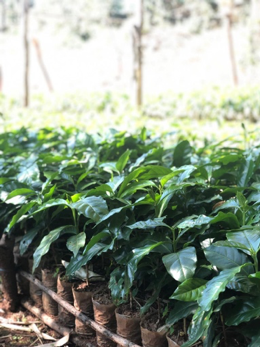
How important coffee varieties are depends on your role in the coffee supply chain: producer, barista, roaster, consumer, If you’re a consumer, you might be wondering why you really need to learn another set of labels for your coffee. Is the variety really that important, compared to the country of origin, roast level, and processing method? And if it is important, why do only some coffee bags tell you about it? The simple answer is that coffee varieties can affect the flavour of the coffee. Some, like Bourbon, are known for their sweet taste. Others, like Gesha/Geisha, are known for tea-like qualities. But coffee flavour isn’t just about the variety: it’s also about the growing conditions, processing, and more. The uniqueness of a high-quality coffee is part of what makes this beverage so wonderful. Roasters, you need to know about varieties because they don’t just affect the flavour profile – they also affect how you roast. Different beans will have different sizes: Maragogype is famously large, while Mokka is tiny. And since roasting is a physical transformation, how heat is transferred throughout the bean is of key importance. You need to understand the physical makeup of your coffee (especially if you’re blending). And producers, varieties are of critical importance to you. Your choice will affect the flavour profile and potential cup score, the hardiness of the plant and its resistance to disease, its productivity, which altitude and temperature it grows at best, and more. Another reason to care about varieties is that Arabica coffee has a worryingly low genetic diversity. This means it is more susceptible to disease and climate change – and could even theoretically become extinct in the future. Creating and/or finding more genetic variety is of key importance right now.
Species, Variety, Cultivar They are many different species of coffee – over 100, according to World Coffee Research (WCR) – but the main three are Arabica, Robusta, and Liberica. Specialty coffee shops rarely sell anything but Arabica, shunning Robusta for its harsher, more bitter taste – although some shops are making the case for Fine Robustas. Liberica is usually only consumed in the Philippines. The category below “species”, when describing plants, is “variety”. Varieties refer to different variations within the species. For example, Caturra is a variety of Arabica while Nganda is a variety of Robusta. As for a cultivar, that’s a coffee variety that has been created by humans in an agricultural setting. Another point that confuses many people is the difference between varietal and variety. Simply put, “variety” is a noun and “varietal” is an adjective. However, because language is almost as complex as coffee genetics, it’s possible to use “varietal” in a way that acts as a noun when discussing the coffee product rather than the plant (something called nominalisation). But this is an article about coffee, not linguistics: it’s enough to say that the differences between “varietal” and “variety” are just grammatical. There are many coffee varieties around the world, and we couldn’t hope to cover all of them in just one article. However, we’re going to take a quick look at some of the most famous or noteworthy Arabica varieties.
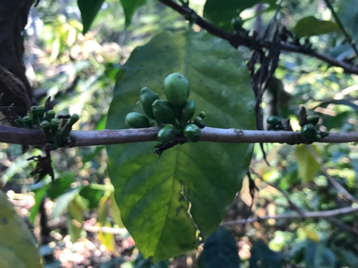
Typica
Typica coffee is one of the earliest and most important coffee varieties, having been around for centuries and engendered numerous others. Notable Typica varieties include Java, Maragogype, and Timor Hybrid. You’ll find this plant being farmed in Central America, Jamaica, and Asia. The WCR label it as low-yield, high-quality, and susceptible to rust and pests. It’s often described as having a clean, sweet acidity.
Bourbon
A natural mutation of Typica, Bourbon is a high-quality, medium-yield coffee known for its sweet taste. It has, however, low resistance to leaf rust, coffee berry borer, and other diseases and pests. It’s commonly grown in Burundi and Rwanda, as well as throughout Latin America. Why should you know about Bourbon? For the same reasons why you should know about Typica: its early appearance in the “coffee variety tree” makes it a common variety that has also engendered numerous others.

Ethiopian Heirloom
While most Arabica coffee varieties come from Typica or Bourbon, coffee originally comes from Ethiopia – and Kew Gardens have established that the country holds 95% of coffee’s genetic diversity. When you see “Ethiopian Heirloom” written on a bag of coffee, it means that it was probably grown wild or in a lightly cultivated garden.
Timor Hybrid
Timor Hybrid is a controversial coffee, since it’s a (spontaneous) Arabica-Robusta hybrid. Robusta is a more, well, robust coffee species: it offers hardiness and resistance to coffee leaf rust in exchange for a less appealing flavour and aroma profile. As a result, this unique coffee has been used in many cultivars, particularly Catimors and Sarchimors. Catimors are a group of Caturra and Timor Hybrid crosses, Sarchimors a group of Villa Sarchi and Timor Hybrid crosses. Examples of these include Castillo, Colombia, and Marsellesa.Specialty coffee buyers can be wary of any plant with a Timor Hybrid parentage – but some producers, especially those at lower altitudes where coffee leaf rust is more likely, believe less risk is worth a potentially lower cup quality and price.
Gesha/Geisha
Gesha/Geisha originated in the village of Gesha, Ethiopia, but remained under the radar until 2003 in Panama. Since then, Panamanian Geisha has become one of the industry’s most-famous coffees. With most coffee championship finalists using it. it’s become a byword for excellence – and exclusivity. It has a distinctive profile: tea-like with a jasmine aroma, orange blossom and bergamot notes, and delicate florals. As for the plant, it grows best at high altitudes (WCR recommend above 1,400 m.a.s.l.), is low-yielding, and can be delicate. While it has earned high prices at auction, there have been horror stories of producers growing it outside of Panama only to see their plants die in incompatible climates and soil.
F1 Hybrids
F1 hybrids are a new generation of coffee varieties that have the potential to be high-quality, rust-resistant, and high-yielding. They are typically mass-produced in advanced nurseries. Notable F1 hybrids include Centromeric, which has seen recent success in the Nicaraguan Cup of Excellence.One of the most important points about F1 hybrids, for producers, is that they are typically more expensive and harder to obtain. They are mass propagated in sophisticated nurseries with tissue culture labs (i.e., they are cloned) instead of by seed. This is necessary because their germinated seeds (the F2, or second generation) will not necessarily possess the same great qualities as the F1 mother plant, meaning that farmers cannot rely on the performance of the plant. For this reason, WCR advises that producers only buy from reputable nurseries.
Caturra
A natural Bourbon mutation, Caturra is a dwarf tree with an average yield, average quality, and average bean size – in fact, the WCR description of an average yield is “Caturra-like”. It is susceptible to rust and pests, and commonly grown throughout Brazil and Latin America. I’ve included it here because of how common it is.
Catuai
Catuai is a Mundo Novo and Caturra cross that shares many of the same characteristics as Caturra: average yield, average quality, average bean size, susceptibility to rust and pests, and dwarf status. This is only an introduction to the wonderful world of coffee varieties. There are many more that deserve attention: Pacas, Pacamara, Maracaturra, Rume Sudan, Laurina, SL-28, SL-34… The list goes on and on. Producers, pick your coffee varieties carefully. Do your research: understand the demands of each one, and the risks that come with it. When planting a new variety, consider starting slowly, with only a small portion of your farm. As for you, coffee lovers, taste as many varieties as possible. Pay attention to how they vary. Compare different varieties grown in the same region – or the same variety grown across different regions. As you start to learn more about how the variety can affect your cup, your appreciation of coffee will only grow.
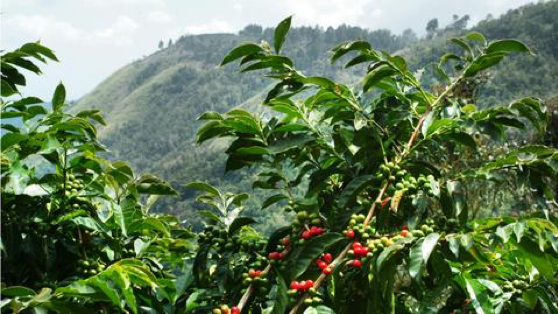
The post Coffee Varieties appeared first on Maillardreaction.org.
]]>The post Agronomy and they relation to other parts appeared first on Maillardreaction.org.
]]>Agronomy is the science of plant production for food, fuel, and fiber. The work of an agronomist encompasses plant genetics and physiology as well as meteorology and soil science. This very simple video from USAID agency working in Uganda will give you an impression of some of the areas that an agronomist oversees. In coffee-producing countries, agronomists operate in the field, working directly with coffee farmers and cooperatives.
They are trained to monitor the terroir of a farming area. Through careful measurements, agronomists can advise farms on practical farm management, helping them achieve the correct levels of soil drainage and teaching them how to implement preventative measures against soil erosion. They can help farmers achieve a sustainable planting density and choose the right fertilizers, and they can offer advice on how to prune and manipulate their trees. Agronomists are the interface between the body of scientific research and the local terroir. To better understand this important practice, we talk about it from other point of view :
hoping to understand more about the science of agronomy. When you are making decisions as to what to plant on your farm or you are advising others on what to plant, what measurements do it need to help more is experiment with varieties that have not been planted at the farm. They are in a kind of Coffee Garden, where we have many varieties expressing their phenotype (meaning, how the plant adapts to the environmental conditions, and how it expresses itself in the cup profile). By now, it really like the behavior and taste of Red Bourbon, Yellow Catuai, Pacamara, Geishas, Rume Sudan, and SL28. All of them are yummy, per se, and we like how cup profile is expressed As a result, it takes years before we set it. For example, you should know know Pacamara and Yellow Catuai will not need too much shade, [which is required] by Bourbon, SL28, and … the Geisha varieties we plant at the farm. the elevation, as our cupping trials have shown, has an impact on the level of acidity. also, we have seen that some of the additional flavor attributes will be more pronounced if the coffee flavor is modulated at the wet-mill. For example, Pacamara and Yellow Catuai will score 84 to 85 points if I do a traditional full-washing process.

But if I do an Orange Honey (semi washed) for Yellow Catuai, or a Natural for a Pacamara, the flavor will explode in my mouth. The Bourbons and Geishas have more versatile cherries; their expression will be great as Natural, or semi-washed or a Double Soak process that is a Full Wash variant, on which prefer is the cherries before depulping, and then give its normal dry fermentation. choosing varieties is something that comes down to microclimate, or the right variety perform well across a range of different conditions in the same terroir, but don’t forget Climate and Edaphic Factors absolutely contribute to the final flavor quality of the bean. Bourbon and Geisha will always express better in a forest environment; Its architecture is full, meaning that their leaves will dress completely the plants. Plants with no stress will always express their happiness in the cup profile J Coffee plants, any variety, will express more crispy flavor when a source of water is close to them. I think mist will help the coffee plants to maintain more fresh temperatures, together with good shade, their system is more stable and with more equilibrium; remembering that this system is found at the forests from Ethiopia where the coffee genetics comes from. Also, coffees grown at higher elevations have a higher chance to score high at the cupping table than coffees grown at lower elevations. 70 percent shade determine normal level of shade , It is very important to handle the architecture of the tree and avoid this kind of parasite.
The post Agronomy and they relation to other parts appeared first on Maillardreaction.org.
]]>